










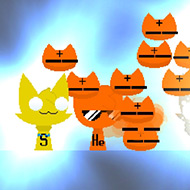



Friday Night Funkin vs Hatsune Miku looks like a cutesy crossover between a rap battle and a pop idol on tour, but it plays exactly like any other brutal note-timing test the base game is known for. The pastel stage lights and vocaloid soundtrack don’t soften the difficulty at all — if anything, the mod’s faster, more melodic charts catch players off guard precisely because the presentation makes everything look friendlier than it actually is.
The mod slots Hatsune Miku into the story as Boyfriend’s sister, a famous singer who wants to meet Girlfriend and ends up sharing the stage with him instead of just watching from the crowd. It’s a small narrative hook, but it changes the tone of the whole week: instead of an antagonist trying to scare Boyfriend off, like Daddy Dearest does in the base game, Miku is framed as someone Boyfriend actually wants to impress.
That shift matters for how the songs are paced. Rather than escalating hostility, the setlist escalates energy, building from a bouncy opener into denser, faster patterns as the “performance” ramps up, which mirrors how a real concert set tends to build toward its loudest song.
Underneath the new characters, the core rules are untouched: arrow notes scroll up the highway toward the receptors, and you hit Left, Down, Up, or Right in time with the beat while your health bar shifts green or red depending on how clean your timing is. Missing notes breaks your combo and drains health, and a long enough run of misses ends the song early, exactly like it would in any other week of Friday Night Funkin.
What the mod changes is the charting itself. Miku’s tracks lean on faster note streams and more syncopated rhythms than a lot of base-game songs, closer to actual Vocaloid production than to hip-hop, which means players who rely on visual pattern memory from other weeks have to relearn timing almost from scratch.
The main week runs four original tracks — Popipo, Aishite, Siu, and Disappearance — each with a noticeably different feel. Early on, Popipo’s bounce is forgiving enough to learn the note layout without much punishment, but by Disappearance the patterns tighten into rapid-fire streams that punish any hesitation. Players who breeze through the base game’s early weeks often get humbled here, since raw reaction speed matters less than actually internalizing where the next burst of notes is coming from.
A later update expanded the mod with additional tracks — Loid, Endurance, Voca, and Endless — plus two secret songs, Infinite and Chug, for players who finish the main set and want the difficulty pushed even further.
Every note you hit gets graded on timing accuracy, and the labels matter more than they look: Sick means you landed within a hair of perfect timing and it’s worth the most points toward your score; Good and Bad both count as hits but chip away at your accuracy percentage; Shit barely counts at all and reads almost like a miss without technically breaking your combo. Players chasing a full combo on Disappearance quickly learn that mashing through the fast sections for “Good” ratings isn’t actually safer than slowing down and aiming for consistent Sicks, since a jumbled input string is what usually causes an outright miss.
Once Disappearance’s final stretch of notes stops feeling impossible, Friday Night Funkin vs Hatsune Miku turns into one of those mods you keep coming back to just to see how clean a Sick-only run through Siu can actually get.