









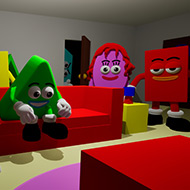
A shape sitting in the wrong silhouette looks obviously wrong the instant it lands there, and that instant, no-explanation-needed feedback is the entire reason Save the Shapes works as well on a five-year-old as it does on someone just looking for something mindless to click through.
The mechanic is exactly as direct as it looks: a colored shape sits on one side of the screen, a matching outline waits somewhere else, and dragging the shape onto its correct silhouette clears it and moves the round forward. There’s no timer pressure baked into the core loop and no penalty system beyond simply not finishing — the game trusts the matching itself to be the whole challenge.
What keeps Save the Shapes from feeling instantly solved is how closely some of the silhouettes resemble each other. A shape that looks like an easy match at a glance can turn out to belong to a subtly different outline nearby, and beginners who drag toward the first plausible-looking silhouette instead of comparing edges directly are the ones who end up bouncing a shape between two wrong spots before finding the right one.
Because the whole interaction is drag-and-drop with no secondary system layered on top, the pacing stays consistent from the first shape to the last. There’s no unlockable tool, no combo multiplier, no separate currency — just a steady sequence of shape-to-silhouette matches that either land correctly or don’t.
Players who lean on color alone to guess a match tend to slow down once the game starts introducing shapes that share a similar palette but a different outline. The more reliable habit is comparing the actual edges of the shape against the silhouette’s outline before dragging, rather than trusting a first impression based on color or rough size.
That distinction — outline over color — is really the only skill Save the Shapes is testing, and it’s precisely why the game holds up as a quick, low-stakes puzzle rather than something that demands sustained concentration. A wrong guess costs nothing but a second attempt, which keeps the whole experience closer to a casual fidget than a real test of precision.
Save the Shapes never asks for more than a steady eye and a willingness to double-check an outline before committing to a drag, and that simplicity is exactly what makes it easy to pick back up for one more round of shapes after telling yourself you were already done.