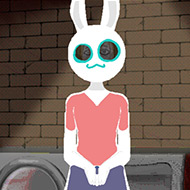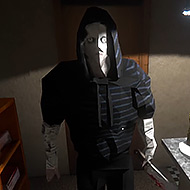












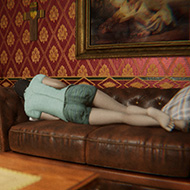
In That’s Not My Mom! something about the mother figure is off before you can say exactly why. The game leans on that unease rather than on any weapon or combat system, asking you to sit with a familiar domestic scene until the wrongness in it becomes impossible to ignore. It is a small, quiet kind of horror, built on noticing rather than reacting.
Games built around this premise typically rely on small inconsistencies rather than jump scares to build tension, since the whole point is that nothing looks obviously wrong at first glance. The kinds of details this genre leans on tend to include:
None of these are dramatic on their own. That is exactly why they work, since the horror comes from accumulation rather than any single moment.
A kitchen, a hallway, a bedroom doorway, these are the kinds of ordinary spaces this style of game uses to unsettle players, precisely because they are so familiar that any deviation stands out. There is rarely anywhere exotic to explore, since the discomfort depends on the setting staying mundane.
That domestic framing is also what makes the premise behind That’s Not My Mom! effective before a single detail is examined closely. The title alone reframes an ordinary household moment as something worth doubting.
Where a chase-based horror game tests reaction time, this kind of game tests attention span instead. Players used to fast horror titles often report the pacing feels slow at first, before realizing the tension is meant to build through repeated, careful looking rather than sudden threat.
That difference is part of what players debate most about games like this. Some find the slower, observation-driven pace genuinely unsettling, while others find it closer to uneventful compared to more reactive horror.
A typical observation loop in this kind of game tends to follow a simple pattern, one that repeats until doubt either resolves or deepens:
That third step is where most of the tension actually lives. Doubting your own read on a familiar scene is often more uncomfortable than any confirmed threat would be.
That’s Not My Mom! works because it turns a completely ordinary household moment into something you cannot stop double-checking. That lingering doubt, more than any single scare, is the whole point of sitting with the mother figure a little too long.