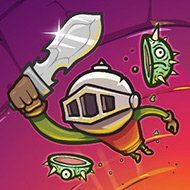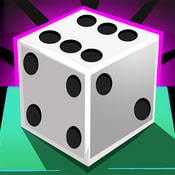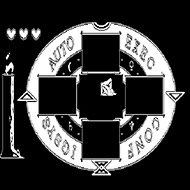
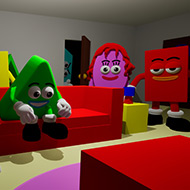









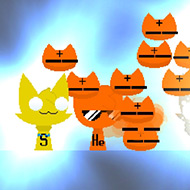



In Gamble With Your Friends you start behind the dealer’s table with a full hand of dice and nothing coming at you yet, which matters because that calm never lasts. Within the first minute or two a Specter drifts in from the edge of the table, and the entire game hinges on one question you have to answer instantly: which die in your hand actually matches its strength. Get it right and the Specter goes down clean. Get it wrong and you’ve wasted a die you’ll want back once three more Specters show up behind it.
You’re the dealer at a haunted casino table, and everything you do is aimed with the mouse. Moving your cursor lines up your throw, a left click sends a die flying at whatever Specter you’re aiming for, and a right click shuffles the dice sitting in your other hand so you can pick a different one without wasting a throw. Reload comes from the middle mouse button or the R key, pulling a fresh set of dice into rotation once you’ve thrown through what you had.
None of this is explained with much hand-holding. The game trusts you to figure out aiming and shuffling within the first wave, and because that first wave is deliberately gentle, most players do figure it out before the pressure actually ramps up.
What’s easy to miss on a first run is that your throwing hand and your reserve hand are two separate resources. Burning through your active hand without shuffling in a better match means you’re stuck throwing whatever’s left, even if none of it lines up with the Specter bearing down on you.
Every Specter that floats onto the table carries a strength value, and hitting it with a die of the exact matching strength is worth noticeably more than a mismatched hit. This single rule is the whole skill ceiling of the game — you’re not just throwing dice at ghosts, you’re constantly triaging which die in your hand is worth spending on which target.
Is the game just about throwing dice as fast as possible? No — and that’s the mistake almost everyone makes on their first attempt. Spam-throwing whatever die is closest at hand clears easy Specters but burns through matches you’ll need later, when several higher-strength Specters show up at once and a mismatched die barely dents them.
Once you start reading the table instead of reacting to it, the rhythm changes completely. You hold a mid-strength die instead of dumping it early, because you already know from the pattern of the current wave that something matching it is about to appear.
The tension in Gamble With Your Friends comes less from any single Specter and more from watching your hand thin out while more targets keep floating in. Shuffling costs a beat of time you don’t always have, and reloading takes even longer, so late in a run you’re constantly weighing whether a marginal match is worth the throw or whether you should hold out for a shuffle.
Beginners consistently misjudge how forgiving the opening stretch actually is. The first minute or two is genuinely easy, almost deliberately so, which lulls new players into sloppy throwing habits that stop working the moment the wave count climbs.
Scattered through a run, Gamble With Your Friends lets you trigger a slot machine for a chance at a bonus, and it’s exactly as risky as it sounds. A good spin can hand you a genuine advantage right when you need one, but the machine doesn’t guarantee anything positive — a bad result can cost you as easily as it rewards you, which keeps the gamble in the game’s own name honest rather than decorative.
Veteran players treat the slot machine as a late-run gamble rather than something to trigger on cooldown. Pulling it during a calm stretch risks a penalty landing at a moment you can least afford one, while pulling it when you’re already struggling means a bad result barely changes your situation but a good one might save the run.
The wheel of fortune works alongside the slot machine as a second bonus system, spinning for an outcome that can swing a round in either direction. Between the two, players generally agree the wheel feels slightly more binary — fewer partial outcomes, more of a clean win-or-lose spin — while the slot machine has a wider spread of smaller results.
How do the slot machine and wheel of fortune bonuses actually work? Both are optional risk mechanics you trigger yourself rather than random events forced on you, and both can swing a close round either up or down, so timing when you pull them matters as much as whether you pull them at all.
The name suggests you’ll be tossing dice alongside people you know, but that’s not how Gamble With Your Friends actually plays. This is a single-player run from start to finish — no shared table, no simultaneous turns, nobody else touching dice in your session. What you actually get is a shared leaderboard, where your score after a run sits next to everyone else’s best attempts.
Is Gamble With Your Friends actually multiplayer? No, and it’s worth being upfront about that instead of pretending otherwise. The “friends” part of the experience comes from comparing scores afterward, not from playing a round together, and treating it as a competitive solo run rather than a group activity sets expectations correctly before you even start.
Because the opening minute is so forgiving, new players often assume the whole run will scale gradually and gently. It doesn’t. Specter density climbs quickly once the game decides you’ve had enough of a grace period, and the jump from “comfortably matching one Specter at a time” to “juggling three at once” catches almost everyone off guard the first few runs.
The players who last longest treat the calm opening as practice time for aiming and shuffling rather than as the baseline difficulty. By the time the real pressure hits, their throws are already automatic instead of something they’re still thinking through.
Past a certain wave count, survival stops being about individual matches and becomes about triage under constant overlap — two or three Specters demanding attention at once, dice running low, and a shuffle that costs just enough time to matter. This is where the leaderboard’s top scores actually get made, and it’s also where the gap between a casual run and a serious one becomes obvious.
The most common community complaint about this stretch of the game is that a single bad shuffle or a mistimed bonus pull can end an otherwise strong run almost instantly, and there’s no way to undo it. That volatility is divisive — some players find it fair given how deliberately the dice-matching system rewards precision, others feel a late-run mistake shouldn’t erase several minutes of careful play in one throw.
Gamble With Your Friends never was about playing alongside anyone in real time, but once you’ve matched a die’s strength to a Specter at the exact right instant and watched three more already queuing up behind it, the leaderboard chase makes plenty of sense on its own.