










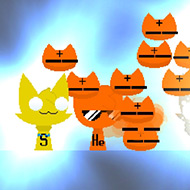




Fortune Mill begins with a single fighter and a passive tree that extends far beyond what you can explore in one run. That imbalance is intentional. Your first character must survive long enough for you to build a squad around them, and the decisions made during those opening waves can influence the entire run.
| Genre | Auto-battler survival with roguelite progression |
| Core Mechanic | Building and commanding a squad through enemy waves |
| Squad Size | Up to six characters fighting simultaneously |
| Category | Multiplayer Games |
Fortune Mill features six different classes, but the best opening choice is not necessarily the one with the most impressive abilities. What matters early on is finding a class that can survive alone while your squad is still developing. A character that struggles against groups can quickly become a liability once enemy numbers begin to rise.
Fortune Mill lets you decide how much control you want over your squad. You can leave the action entirely to the auto system, control characters manually, or combine both approaches. Auto works well during predictable waves, while manual control becomes much more valuable when positioning and timing determine whether the squad survives.
A flexible approach usually works best. Let the squad handle ordinary waves automatically, then take control when a boss appears or the battlefield becomes crowded. Returning to auto afterward keeps the less demanding portions of a run moving without unnecessary micromanagement.
Boss encounters are important because defeating them can provide rewards that alter your abilities and influence how your squad develops. Instead of simply making your characters stronger, these rewards can change the direction of a build and make certain combinations more effective.
Experience and loot also contribute to progression between runs. Crafted gear provides another layer of improvement, while the enormous passive tree offers a long-term path for developing different classes. With more than a thousand nodes to explore, completing the entire tree is not the objective of a single run. The real challenge is selecting a route that complements the characters and abilities you want to use.
As more ability-changing rewards accumulate, enemy density becomes increasingly difficult to manage. Large groups can surround poorly positioned characters, making movement and spacing just as important as the abilities themselves. A build that performs well against smaller groups may struggle badly once the screen becomes crowded.
Fortune Mill also has a considerable learning curve. Six classes, numerous items, evolving abilities, and an exceptionally large passive tree give experienced players plenty of room to experiment, but newcomers may initially find the number of systems overwhelming. Understanding how these mechanics interact takes time.
Fortune Mill is at its most rewarding when its many progression systems begin working together. Starting with one fighter and gradually turning that character into the foundation of a six-person squad gives each run a clear sense of development. For players who enjoy experimenting with builds and planning long-term progression, the passive tree and boss rewards provide plenty of reasons to keep refining the next run.