










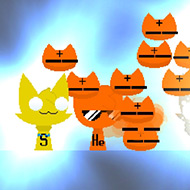




In Shieldwall you pick a fighting style before the match even starts, and that single choice shapes almost every decision that follows. An archer, a halberd-wielding knight, and a sword-and-shield fighter play nothing alike once the arena fills up with other players, and picking the wrong one for a given match can leave a player outmatched before the first swing even lands.
| Genre | Multiplayer arena combat |
| Core mechanic | Picking a knight class, fighting other players, leveling up mid-match |
| Classes | Archer, halberd knight, sword-and-shield knight, among others |
| Objective | Outlast and defeat opposing players in the arena |
Every knight in Shieldwall brings a distinct weapon and range profile. The archer attacks from a distance and depends on keeping space between itself and anyone closing in fast. The halberd knight trades that range for reach and raw damage, punishing anyone who wanders too close without a plan. The sword-and-shield knight sits in the middle, trading some offense for a shield that softens incoming hits, which makes it the more forgiving pick for a player still learning how the arena’s spacing works.
New players often default to the sword-and-shield knight for exactly that reason, and it is a reasonable starting point. The shield buys mistakes room to happen without ending a match immediately, which matters more than raw damage output when a player is still learning how opponents in a crowded arena tend to move.
The wider weapon selection beyond the three core classes adds swords, bows, and magical staves, each with its own balance of damage, range, and attack speed. Committing to a weapon style early and building the rest of a run around it tends to work better than switching mid-match, since relearning spacing on the fly against players who already know their own range is a losing habit.
Shieldwall does not hand out a full build at the start. Killing opponents or picking up blue potions scattered through the arena grants a chance to enhance one of three randomly offered skills, gradually pushing a knight’s attack, defense, or health higher as a match continues. That randomness means no two runs build identically, even with the same starting class.
Elixirs scattered separately from the blue potions restore health rather than granting skill points, and knowing the difference between the two pickups at a glance matters more than it sounds, since grabbing an elixir when a skill point was actually needed wastes a valuable moment in a crowded fight.
A common mistake among newer players is chasing every potion visible on the map regardless of position, wandering into open ground to grab one and getting caught by a ranged opponent in the process. Players who last longer treat potions as worth detouring for only when the detour doesn’t expose them to an archer’s clear sightline.
Because the three skill options offered at each level-up are random, adapting the build to whatever appears rather than chasing a fixed plan from the start tends to produce a stronger knight by the late stages of a match than stubbornly waiting for one specific skill to show up.
The arena supports playing solo against the field or teaming up with friends, and the two modes feel meaningfully different. Solo play in a crowded arena means constantly reassessing threats from every direction, since nobody is watching a player’s back. Playing alongside friends turns the same arena into something closer to coordinated combat, where a halberd knight can hold a chokepoint while an archer picks off anyone who gets caught in the gap.
This is also where opinions split among regular players. Some prefer the constant vigilance of solo arena runs, treating every match as a test of positioning against unpredictable strangers. Others find solo play chaotic in a way that rewards luck as much as skill, and much prefer coordinating class picks with friends beforehand so the group covers each other’s weaknesses instead of everyone grabbing whichever weapon looks strongest.
Neither side is wrong exactly; the arena was clearly built to support both, and which one feels better tends to come down to whether a player enjoys reading unpredictable opponents or coordinating a plan with people they already trust.
Shieldwall rewards a player who commits early to a class and adapts the random skill offers around it, and by the time a match narrows down to the last few knights standing, whoever read the arena’s spacing best usually outlasts whoever simply hit hardest.