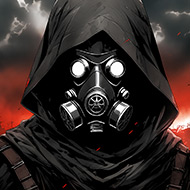
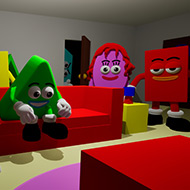








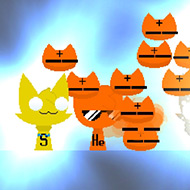


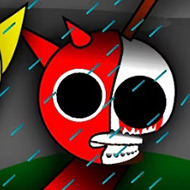
You drag the first icon into an empty slot in Sprunki But HURRICANE and the silence turns into a low, rolling hum, like distant thunder deciding whether it wants to get closer. Every icon you add afterward nudges the mix a step further from ambient noise toward something that genuinely sounds like weather closing in.
There’s no title card and no instructions panel. Sprunki But HURRICANE drops you onto the stage with a row of empty slots and a lineup of icons along the bottom edge, and that’s the entire onboarding. Anyone new to the format has to figure it out by clicking until sound happens.
What redeems the rough landing is how forgiving the mixing is — pulling an icon back out just quiets that layer instead of resetting the loop, so mistakes cost nothing more than a re-drag.
Each icon represents a distinct sound — a beat, a bassline, a vocal snippet, or an effect layer — and dropping it into an open slot adds that sound to the mix, usually inside the first minute of clicking around. Like most mods built on this drag-to-layer format, the arrangement runs across a fixed row of slots, closer to assembling a lineup than composing from scratch. By the time every slot fills, the mix hits its loudest point, and that full-intensity moment is what most players are chasing when they replay the game.
The most common misstep is treating Sprunki But HURRICANE like it’s building toward an ending. There’s no final screen and no scoring, so the loop itself is the reward.
Regulars talk about “the mix,” not a score — something you build, not something you win. The empty-description, no-instructions state of the game is honestly the most divisive part of it: not broken, just built for players who already know the format.
Sprunki But HURRICANE isn’t a rhythm challenge or a story-driven game, and once you stop expecting either, the icon lineup becomes exactly what it’s built for: a low-stakes way to build a full storm mix from nothing, one dragged icon at a time.