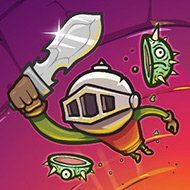










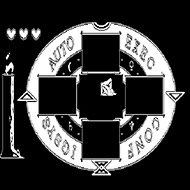
In Monster Summoner you start with four empty summoning tables, a full set of hearts, and a candle already lit on the left side of the screen, and all three of those things matter before you touch a single tile. The candle is the real opponent. Every second it burns is a second you are not sliding a face tile into position, and the ritual does not pause to let you think.
| Genre | Puzzle / arcade ritual |
| Core Mechanic | Match four identical monster tiles on a table before the candle burns out |
| Controls | Arrow keys or WASD |
| Session Length | One candle’s burn per attempt |
Each of the four summoning tables holds four positions, and the ritual only completes when all four hold the same monster type. Glance at the wrong table while sliding a tile and you place a match where a mismatch was building, a mistake nearly every new player makes in the opening minutes.
Players who treat this like a slow puzzle instead of a timed one tend to lose more hearts than they gain summons, because the candle keeps burning while they deliberate. The tables do not wait for a plan.
Sliding a face tile onto a table position that is already occupied costs a heart immediately, regardless of whether the two tiles would have matched. That collision rule catches players watching monster type who forget which slots are already filled, especially once two or three tables are active at once.
Mixing different monster types onto the same table does not cost a heart directly, but it produces junk instead of a completed summon, wasting the time already spent filling that table. Careful players learn to abandon a table early rather than keep feeding it tiles that cannot match.
Face tile: the piece steered with arrow keys or WASD, carrying one monster type until it is committed to a table position. Losing track of which type you are carrying is what causes most accidental junk piles.
Candle: the burning timer on the left of the screen, with an audio cue that changes pitch as it nears the end. That single sound, more than any visual cue, is what separates a controlled finish from a panicked scramble across all four tables.
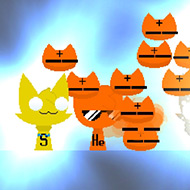
The game starts out fair, favoring easy matches on the first table or two, but it grows less forgiving with each monstergirl successfully summoned. Tile variety increases and the timing window tightens, so a run that felt comfortable in the opening summons can spiral quickly once four tables are active at full difficulty.
This is one of the more debated parts of the ritual among regular players, since the escalating difficulty only resets when a new attempt begins. Some see it as a natural difficulty curve, others feel it punishes success by making the next summon harder than the one before it.
Treating hearts as a strict lives counter is the biggest early mistake, since the smarter approach is spending them deliberately on risky slides that open up a table faster than playing safe would. Losing a heart to a calculated collision is often a better trade than losing the whole candle to overcaution.
Once hearts are understood this way, Monster Summoner starts to feel less like a reflex test and more like a resource decision made under a burning clock, which is exactly the tension regular players describe when talking about a good run.
Hearts are lost for sliding a tile onto an already-occupied table position, not for mismatched monster types. If a slot is filled, placing another tile there costs a heart immediately, even if the type carried would have completed the match.
Each attempt begins with a small, fixed pool of hearts rather than an open-ended supply. Careless collisions early in a run can end an attempt before the candle even reaches its halfway point.
The ritual becomes less forgiving with each completed summon, introducing more tile variety and tighter timing across the four tables. That escalation resets only when a new attempt begins, which is why a strong opening streak does not guarantee an easy finish.
Monster Summoner rewards players who stop treating hearts as untouchable and start treating the candle as the true countdown. Nothing makes that clearer than watching a table fill with junk because a monstergirl match was one slot too slow.